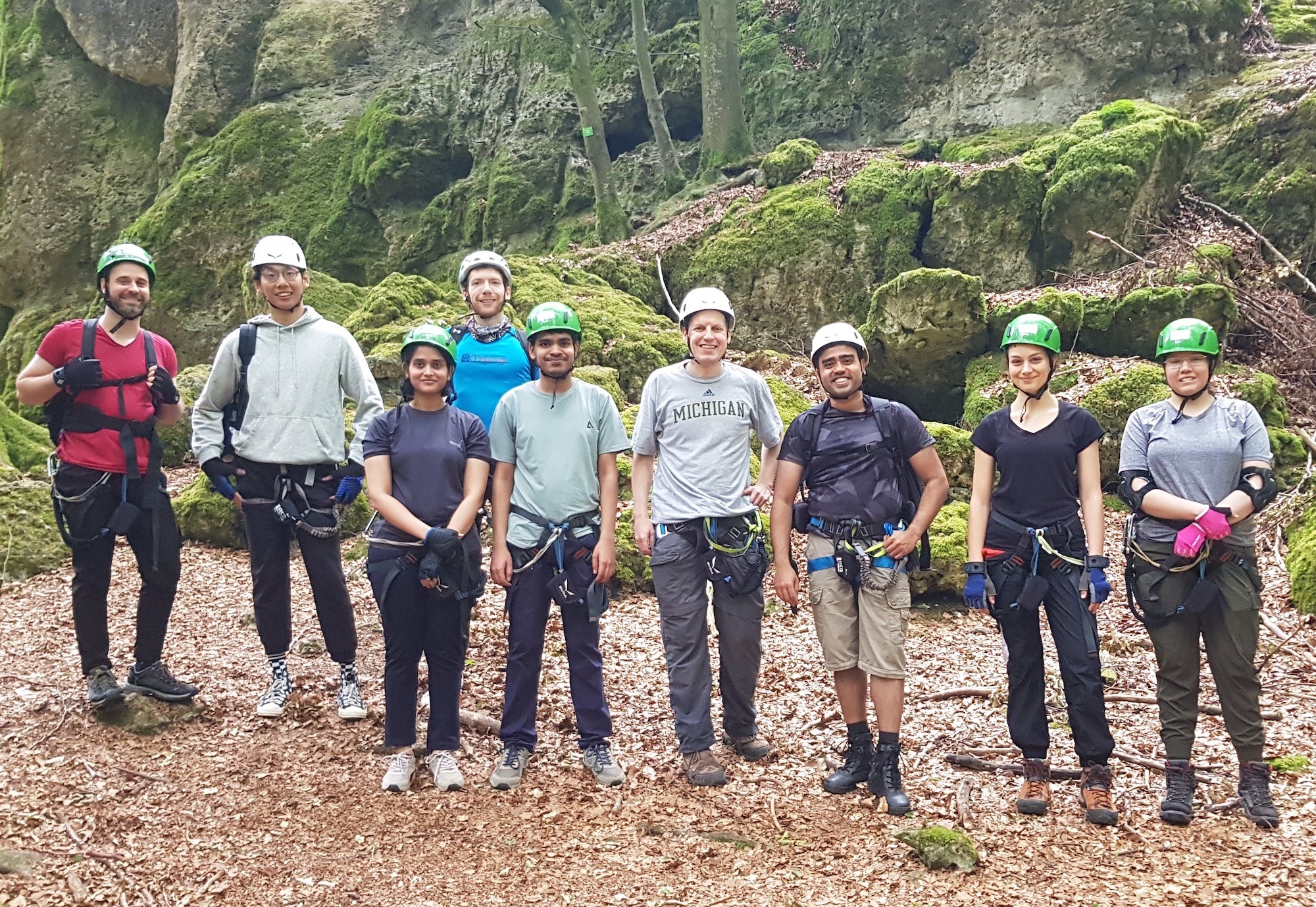
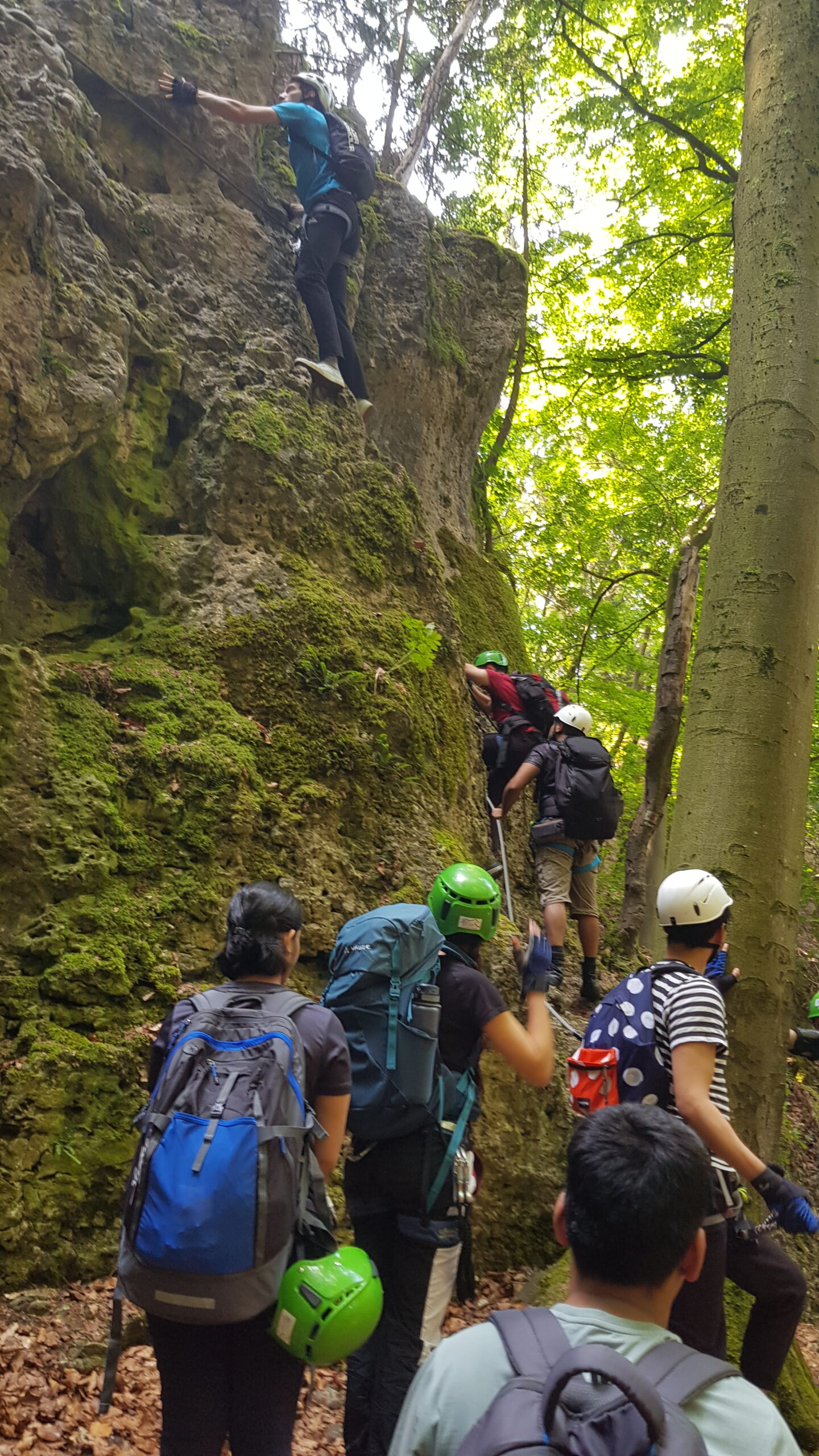
This year’s annual outdoor event took us on a scenic hiking tour starting and ending in Muggendorf. Along the way, we explored the Witzenhöhle, enjoyed the view from Hohes Kreuz towards Engelhardsberg, and paused at Kuchenmühle for a break.

The day offered the right mix of nature, curiosity, and good company: cave exploration, close observation of wind-made wave patterns moving through the grass, and beaver spotting in the River Wiesent during dinner.

From the Hohes Kreuz lookout towards Engelhardsberg.
Exploring the Witzenhöhle.

We are offering a summer school course in this year’s Ferienakademie. The Ferienakademie is an opportunity for students to dive into a current computational research topic over the course of twelve days in the setting of the Northern Italian/Tyrolian Alps.

Ferienakademie 2026 · Course 9

Learning Rules for Life-Like Emergent Behavior

How can complex, adaptive behavior arise from simple local interactions? In this course, we explore self-organization, collective intelligence, and emergent dynamics in natural, physical, and artificial systems — and learn how to discover rules that generate them.

Lecturers: Michael Engel (Erlangen), Thomas Speck (Stuttgart)
Language: English
Participants: Physics, Engineering, Computer Science, Mathematics, or related disciplines (Bachelor from 3rd year or Master)

Please click here to learn more. Application deadline: 3 May 2026.

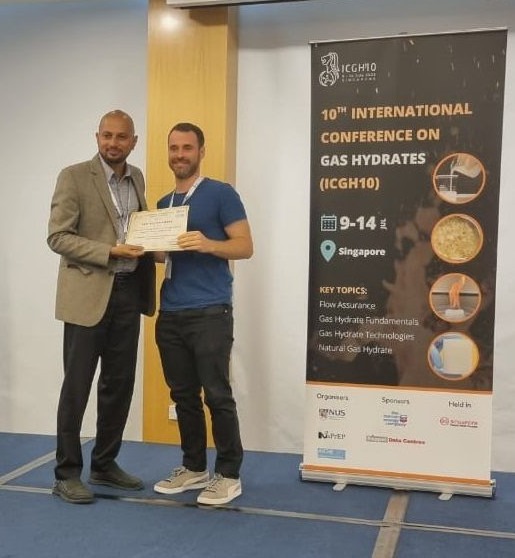
Jyoti received a poster prize at the 21st Zsigmondy Colloquium 2026 for her poster entitled “Kinetic Monte Carlo Simulations for Twinned Nanoparticle Growth and Facet-Selective Etching.” Congratulations!

Her work uses kinetic Monte Carlo simulations to study how metal nanoparticles grow and evolve at the atomic scale. The poster focused on the formation of twinned nanoparticle structures and high-index facets, which are relevant because such defect-rich and surface-structured materials can exhibit enhanced catalytic and functional properties.

The Engel Lab co-organized the Particle-Based Materials (PBM) Symposium 2025, which recently concluded. Thank you to all participants for attending!

The goal of the symposium was to bring together scientists and engineers who share the common interest in creating functional materials using particles. The synthesis, processing and materials integration of particles into thin films, bulk matrices, fibers or other geometries are covered by this symposium.

Next year’s 10th PBM conference will take place in September/October at Universität Duisburg-Essen. Stay tuned!

Carlos Bassani has been awarded a prestigious ERC Starting Grant for his project “Kinetic Pathways to Control Nanocrystal Shapes” (kineticSHAPES). With approximately €1.5 million in funding, kineticSHAPES aims to use advanced simulation techniques to uncover how nanocrystals adopt shapes such as cubes, spheres, pyramids, and plates, a phenomenon that plays a critical role in their optical, mechanical, and catalytic properties. Moving beyond classical thermodynamic models, the work seeks to map out the kinetic factors that govern shape formation, paving the way for innovations in green-energy photocatalysis and next-generation cancer therapies.

Congratulations to Carlos on this tremendous achievement — and we look forward to the exciting discoveries ahead!

For more information:
FAU News: Cubes, spheres and nanopyramids

Following the annual tradition, we made another summer excursion, this year to Brombachsee. There we explored Abenteuerwald Enderndorf (including the zipline) and enjoyed a relaxing afternoon at the beach. Thanks all for joining!

Walking back from the beach on a hot day.

How do a small number of larger colloidal particles behave when mixed with many smaller ones inside spherical droplets? We found that entropy alone drives the larger particles to the droplet surface, where they consistently settle at the twelve vertices of an icosahedral structure formed by the smaller particles. Using a combination of experiment and simulation, we showed that this trapping effect is robust and results from the system’s tendency to maximize free volume during self-assembly. These findings offer new insight into how complex structures can form without external guidance and support the design of programmable materials through simple physical principles.

The large colloids (red) get trapped at the icosahedral vertices.

Read about this work here:

Praveen K. Bommineni, Junwei Wang, Nicolas Vogel, Michael Engel
Entropic Trapping of Hard Spheres in Spherical Confinement
Physical Review Letters 134, 198201 (2025)

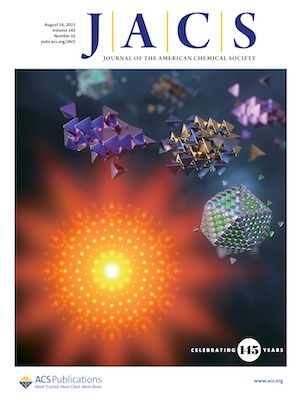
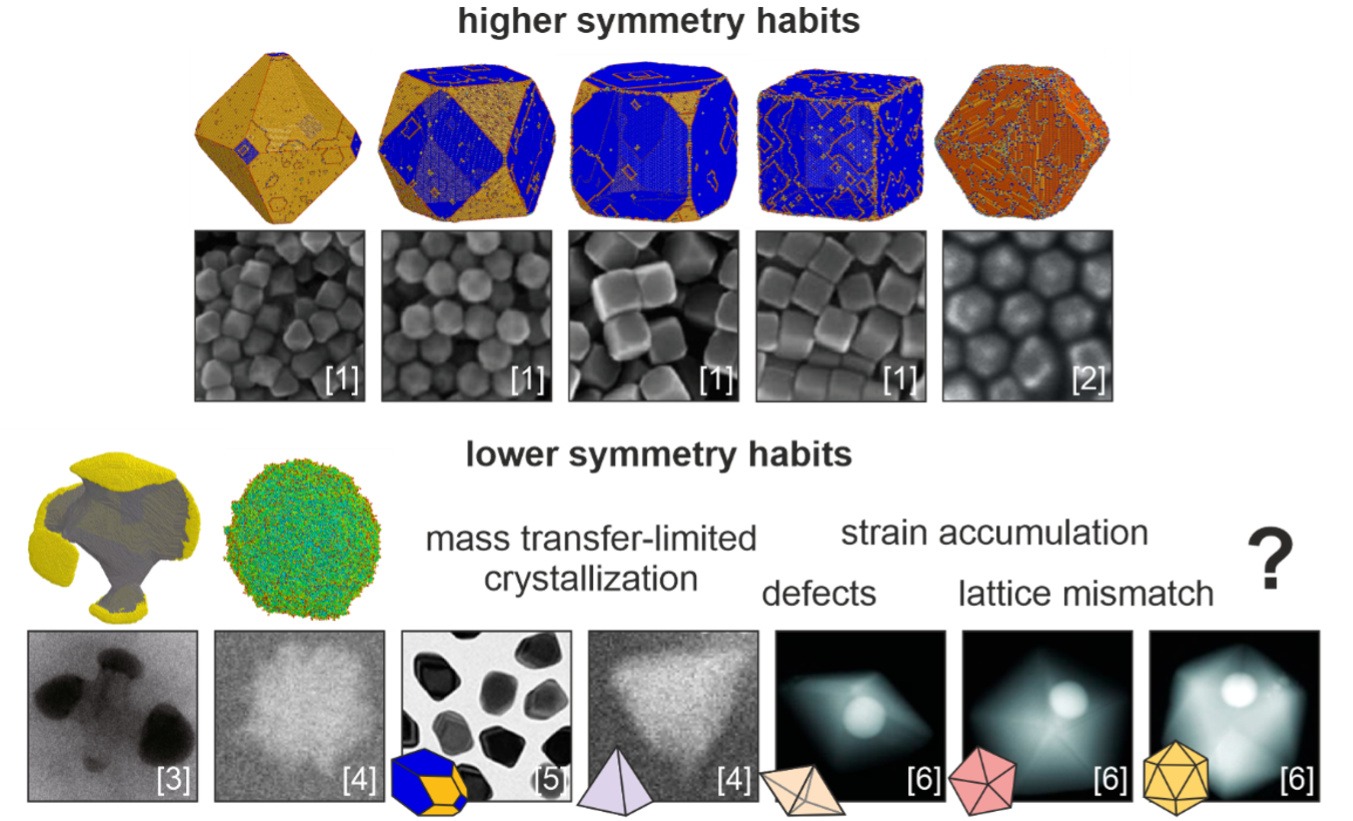
Scientists have long known that the shape of tiny crystals (nanocrystals) can affect their properties, such as how they interact with light or how well they function as catalysts. However, precisely understanding how these shapes form has been challenging, since many factors are involved: temperature, chemicals in the solution, and even the arrangement of atoms at the crystal’s edges. In this study, the researchers introduced a theoretical and computational approach that focuses on the critical spots where atoms attach as the crystal grows. By examining the energy required to add atoms at these sites, they explain why certain shapes, including cubes, octahedra, or other symmetrical forms, often appear.

Beyond explaining why various shapes emerge, this method can guide experimental design. It enables scientists to predict which conditions favor different morphologies and to control crystal growth toward specific outcomes. The study shows that the first atom to grow on the surface, referred to as the adatom, dominates the process by creating temporary pathways that lead to particular shapes. This new understanding not only clarifies how nanocrystals form but also suggests ways to refine their shapes for targeted uses in technology and medicine.

Read about this work here:

Carlos L. Bassani, Michael Engel
Kinetically Trapped Nanocrystals with Symmetry-Preserving Shapes
Journal of the American Chemical Society 147, 9487-9495 (2025)

The shape diagram summarizes the change of nanocrystal shape across growth parameters. Here: the growth rates of adatoms on the three major crystallographic facets.