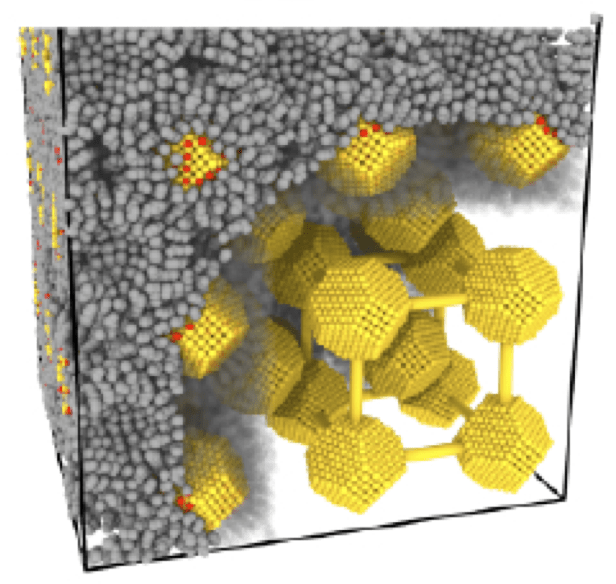
We are offering a summer school course in this year’s Ferienakademie. The Ferienakademie is an opportunity for students to dive into a current computational research topic over the course of twelve days in the setting of the Northern Italian/Tyrolian Alps.

Ferienakademie 2026 · Course 9

Learning Rules for Life-Like Emergent Behavior

How can complex, adaptive behavior arise from simple local interactions? In this course, we explore self-organization, collective intelligence, and emergent dynamics in natural, physical, and artificial systems — and learn how to discover rules that generate them.

Lecturers: Michael Engel (Erlangen), Thomas Speck (Stuttgart)
Language: English
Participants: Physics, Engineering, Computer Science, Mathematics, or related disciplines (Bachelor from 3rd year or Master)

Please click here to learn more. Application deadline: 3 May 2026.

The Engel Lab co-organized the Particle-Based Materials (PBM) Symposium 2025, which recently concluded. Thank you to all participants for attending!

The goal of the symposium was to bring together scientists and engineers who share the common interest in creating functional materials using particles. The synthesis, processing and materials integration of particles into thin films, bulk matrices, fibers or other geometries are covered by this symposium.

Next year’s 10th PBM conference will take place in September/October at Universität Duisburg-Essen. Stay tuned!

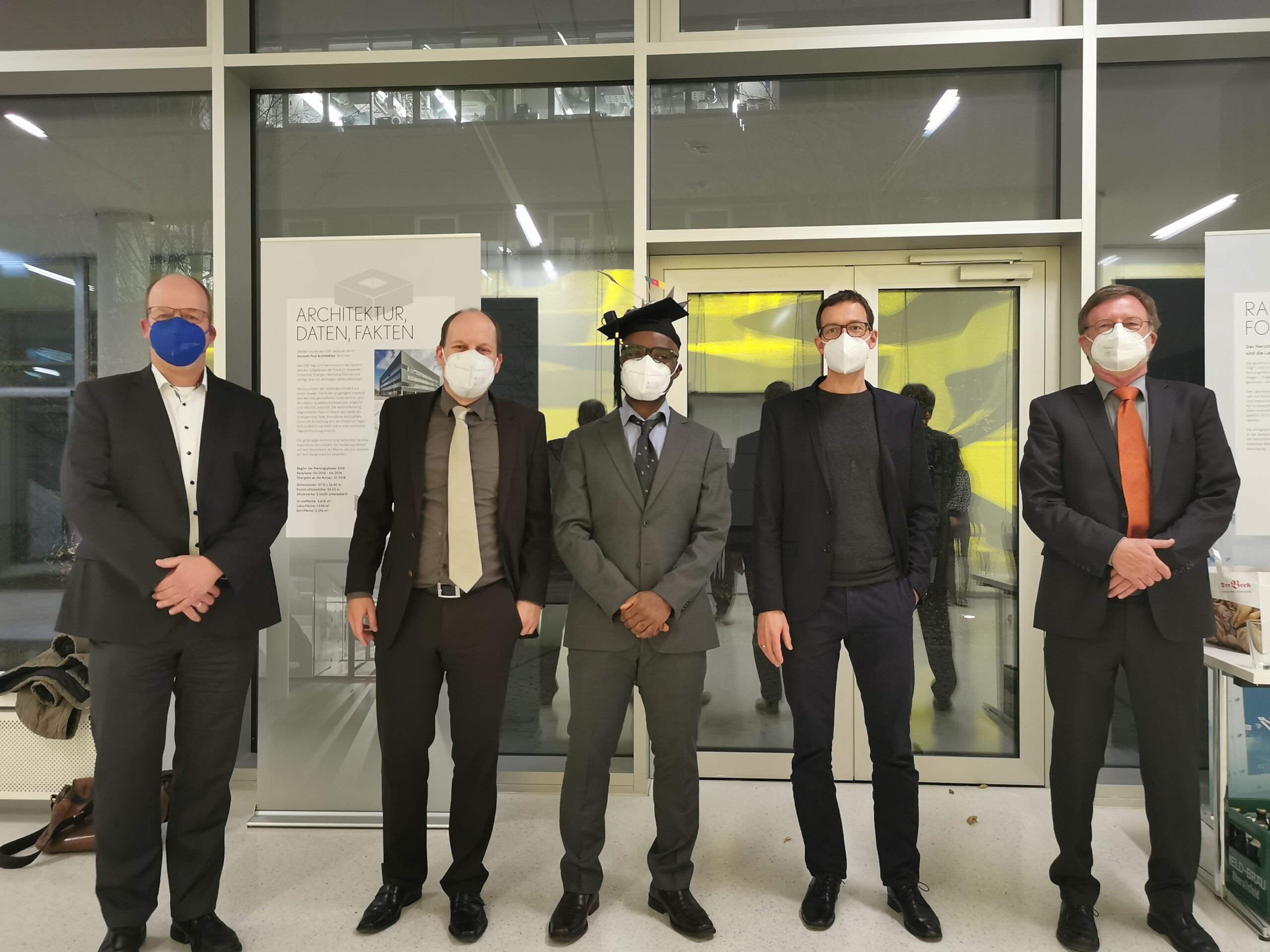
Nydia Varela-Rosales defended her thesis and obtained a PhD in Physics. The title of her thesis is: “Computational Design and Thermodynamic Stability of Aperiodic Crystals and their Approximants”.

Congratulations!

For the time June to November 2024 Praveen Bommineni from the National Institute of Technology Warangal (India) is conducting research in our group. A focus of joint research is colloidal crystallization in confinement. The research is funded through the guest research program of FAU and the CRC 1411. Praveen has been a postdoctoral research in the group and returning for a sabbatical.

Welcome to Erlangen!

For the month of April, Mike Widom from Carnegie Mellon University and Marek Mihalkovic from Slovak Academy of Sciences are conducting research in our group. A focus of joint research is on complex order and statistical mechanics. The research is funded through the guest research program of FAU.

Welcome to Erlangen!

The German Research Foundation just announced that CRC 1411 will receive funding until 2028.

The long-term vision of CRC1411 is to develop particle systems with controlled size, shape and composition. The innovative approach in CRC1411 is is that these materials are first developed and optimized for specific product properties in computer models. In the second step, the computer then predicts optimal synthesis conditions that lead to particles with these desired properties. This approach reverses typical manufacturing processes and promises fast and resource-efficient access to functional particle-based materials with optimal characteristics.

We would like to announce the Kavli Institute of Theoretical Physics (KITP) conference entitled:

Structure Design and Emerging Phenomena in Nanoparticle Assemblies: What’s next?

Time: May 15-18, 2023
Location: University of California, Santa Barbara
Registration deadline: April 16, 2023

The conference aims to provide a coherent view of the current state of the field, bringing together researchers with different expertise and backgrounds. It should catalyze the development of new methods, both theoretical, computational and experimental, and define the basic science in this field.

More information can be found at: https://www.kitp.ucsb.edu/activities/nanoassembly-c23

The workshop organizers

Michael Engel, Friedrich-Alexander-Universität Erlangen-Nürnberg
Laura Na Liu, Universität Stuttgart
Monica Olvera, Northwestern University
Eran Rabani, University of California, Berkeley
Alex Travesset, Iowa State University
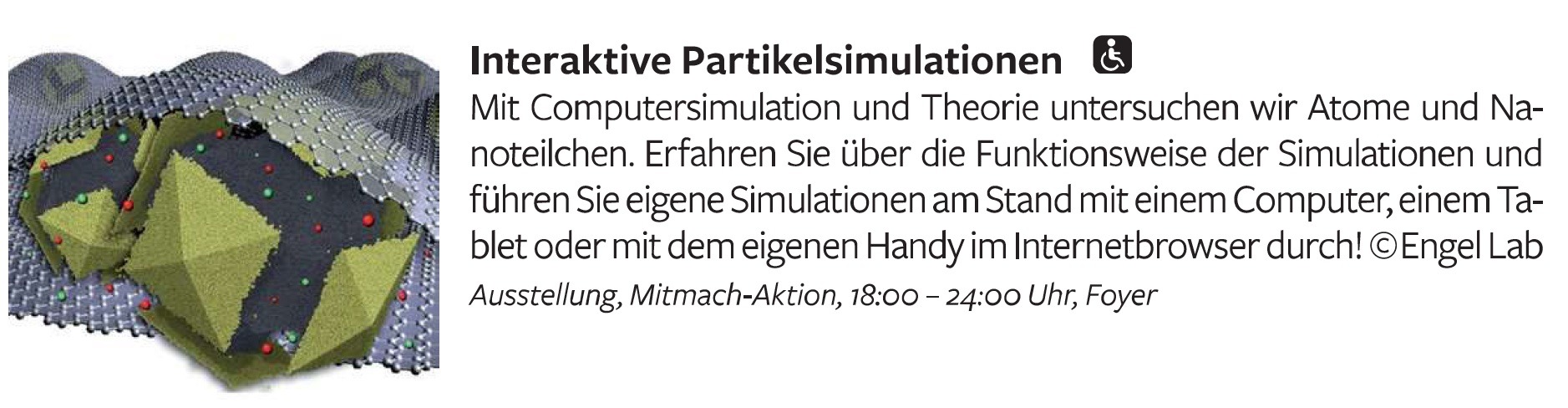
Our lab will participate again at this year’s long night of science (open door to the university).

Visit us on south campus this Saturday, May 21 from 18h to 24h and learn about other activities at: https://nacht-der-wissenschaften.de/

At the IZNF building, Cauerstrasse 3 in Erlangen visitors can perform interactive simulations or learn about our research.
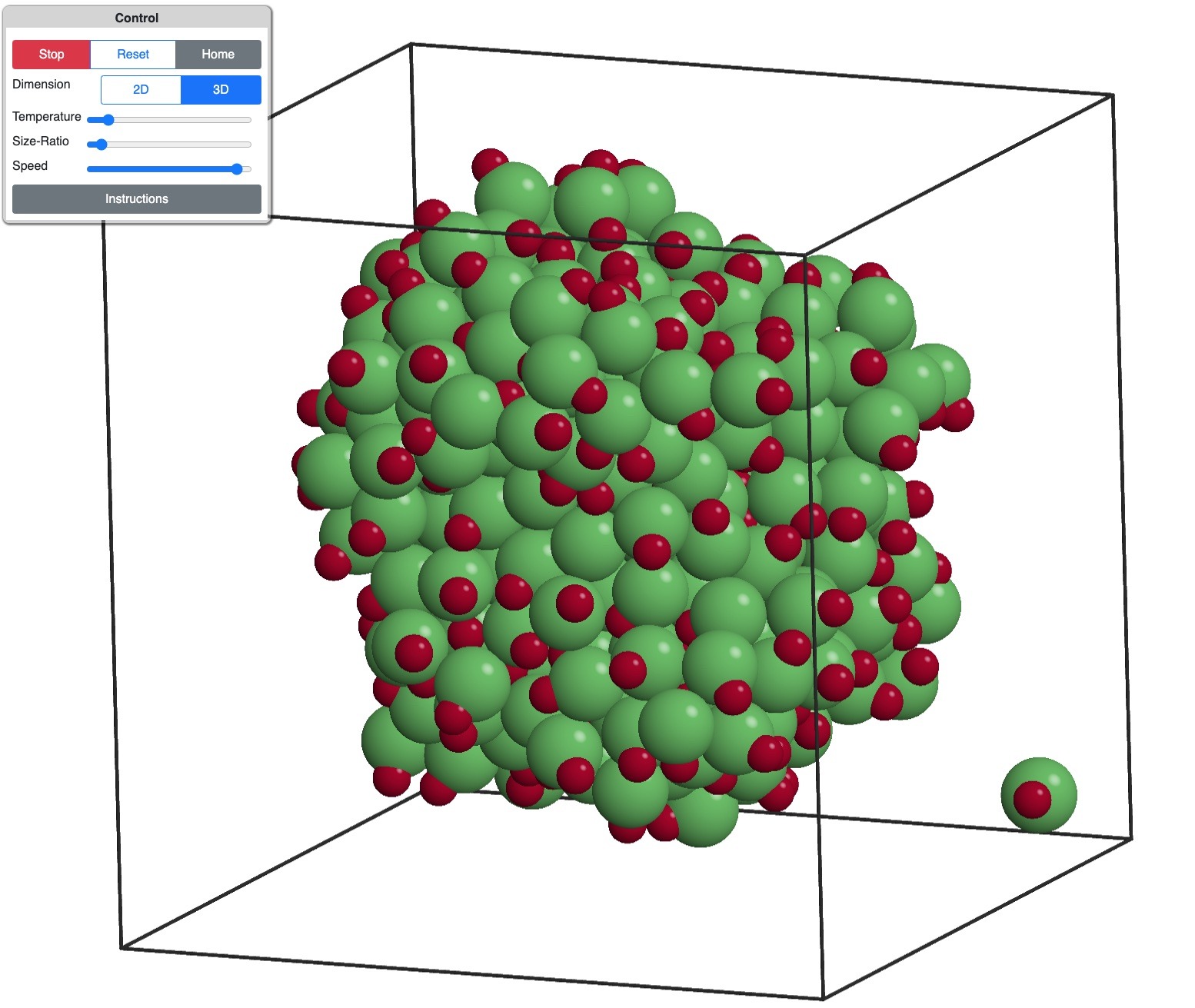
Simulations can be performed on stationary computers, iPads, or on your own smartphone.

Thanks to Navid Panchi, Federico Tomazic, and Nydia Varela-Rosales for javascript/html5 coding and the design of the demos!

Check out the simulation tool here:
Interactive Particle Simulations for LN ’22

We* are coordinating a program at the Kavli Institute of Theoretical Physics at UC Santa Barbara in the period Mar 27, 2023 — May 19, 2023 on the topic nanoparticle assemblies. Applications can still be entered here:

Nanoparticle Assemblies: A New Form of Matter with Classical Structure and Quantum Function

*Coordinators: Michael Engel, Laura Na Liu, Monica Olvera de la Cruz, Eran Rabani, and Alex Travesset

Materials whose elementary building blocks are nanoparticles with dimensions between a few and hundred nanometers, such as nanocrystals and colloids, instead of atoms or molecules, provide a new form of matter, with many properties, both in structure and function, that are not achievable with traditional materials. This raises a number of new fundamental questions such as:

  • What is the minimal physical description at the nanoscale?
  • How to discover new assemblies?
  • What are the effects or properties for these new materials and the characterization of equilibrium and metastability?

The program will bring together scientists from diverse communities: physicists, chemists and material scientists in an effort to address the emerging fundamental questions and long-term prospects of this young field. It will develop collaborative efforts in the areas of programmable assembly, structure prediction, inverse methods, electronic properties and new functional materials, with the goal of becoming a reference for the exciting future ahead.